
Jones County Arrest Records and Court Charges
A Jones County arrest record is the record of the arrest itself. It shows that a person was booked into custody, the agency that made the arrest, the booking date, and the charges listed at intake. The Jones County Sheriff's Department keeps this booking data and publishes a public inmate roster, but the sheriff states plainly that the roster is a convenience record and not a certified official document. Arrest records describe the start of the process, before a court has tested anything.
The court charge record is a different file. After an arrest, the District Attorney decides which formal charges to file, and those charges are entered with the court clerk where they are tracked through the case. The booking and custody side lives with the sheriff, so the Jones County inmate records page covers the roster and booking detail. The full case file, including pleas, disposition, and sentence, builds in the Circuit or County Court. Court charges after arrest are the bridge between the two.
How to Find Jones County Arrest Records and Charges
Charges and their current status appear in the court case index, while raw arrest and booking detail appears in the jail roster. For Circuit Court and County Court cases, the charges are filed in Mississippi Electronic Courts, the statewide e-filing system. Public users reach those filings through Public Access to MEC, known as PAMEC, which needs a registered account and charges for use. Jones County cases have been on MEC since December 18, 2017.
- Open the Mississippi Electronic Courts system and register through the PAMEC online registration site.
- Search by the defendant's full name or by the case number, trying spelling variations for common names.
- Open the case and read the charge list, count by count.
- Check each charge for its statute code, severity level, and current status.
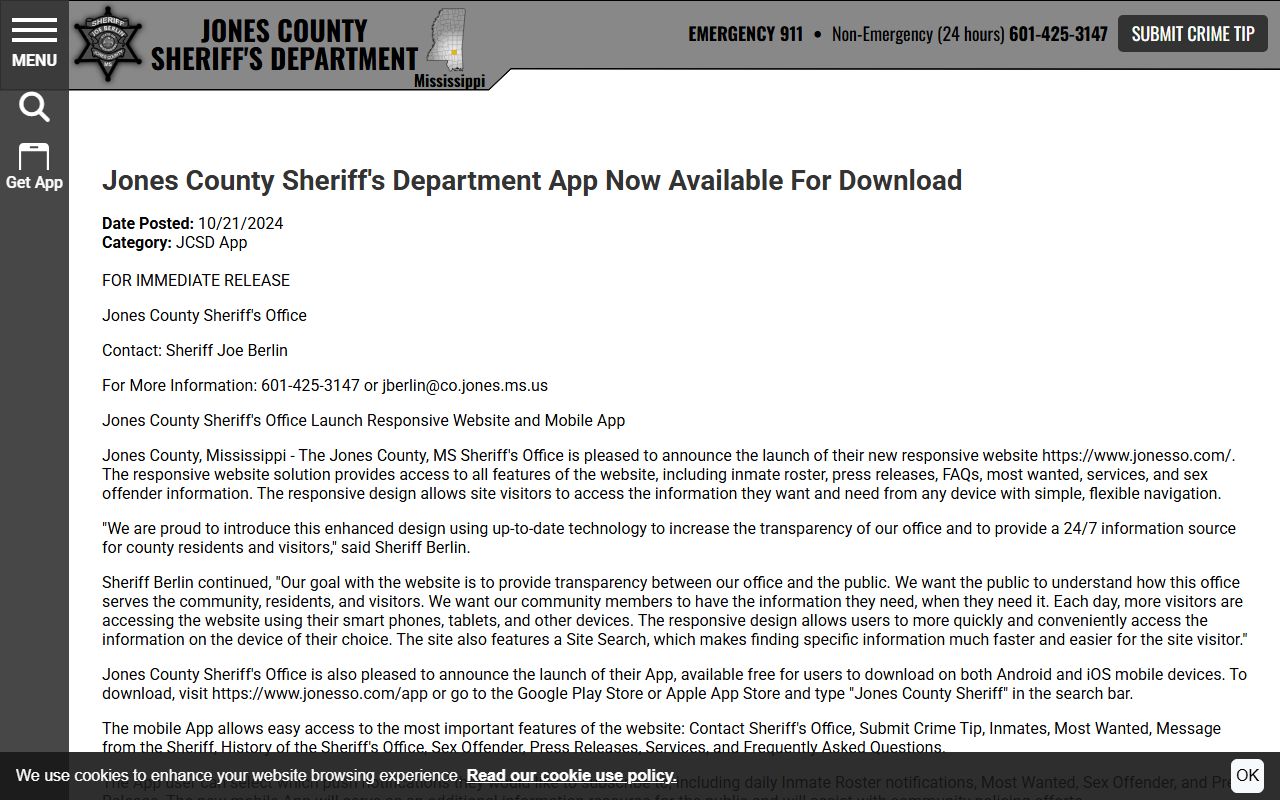
For the arrest and booking side, the sheriff publishes the current inmate roster and a wanted list online, and the same information feeds the Jones County Sheriff mobile app. The sheriff's press release announcing the app describes inmate, most wanted, and sex offender sections, plus crime tips and contact messages.
The app and roster help confirm a recent booking, but they do not replace the court file when you need the formal charges and their status.
Jones County Arrest Records and the Sheriff App
The Jones County Sheriff's Department offers a mobile app that pulls together the public-facing arrest and custody tools in one place. It lists current inmates, most wanted persons, and registered sex offenders, and it lets users send crime tips and contact messages to the office. As of late 2024, the sheriff stopped sending text and email notifications and asked the public to use the app for push alerts, including daily inmate roster updates.
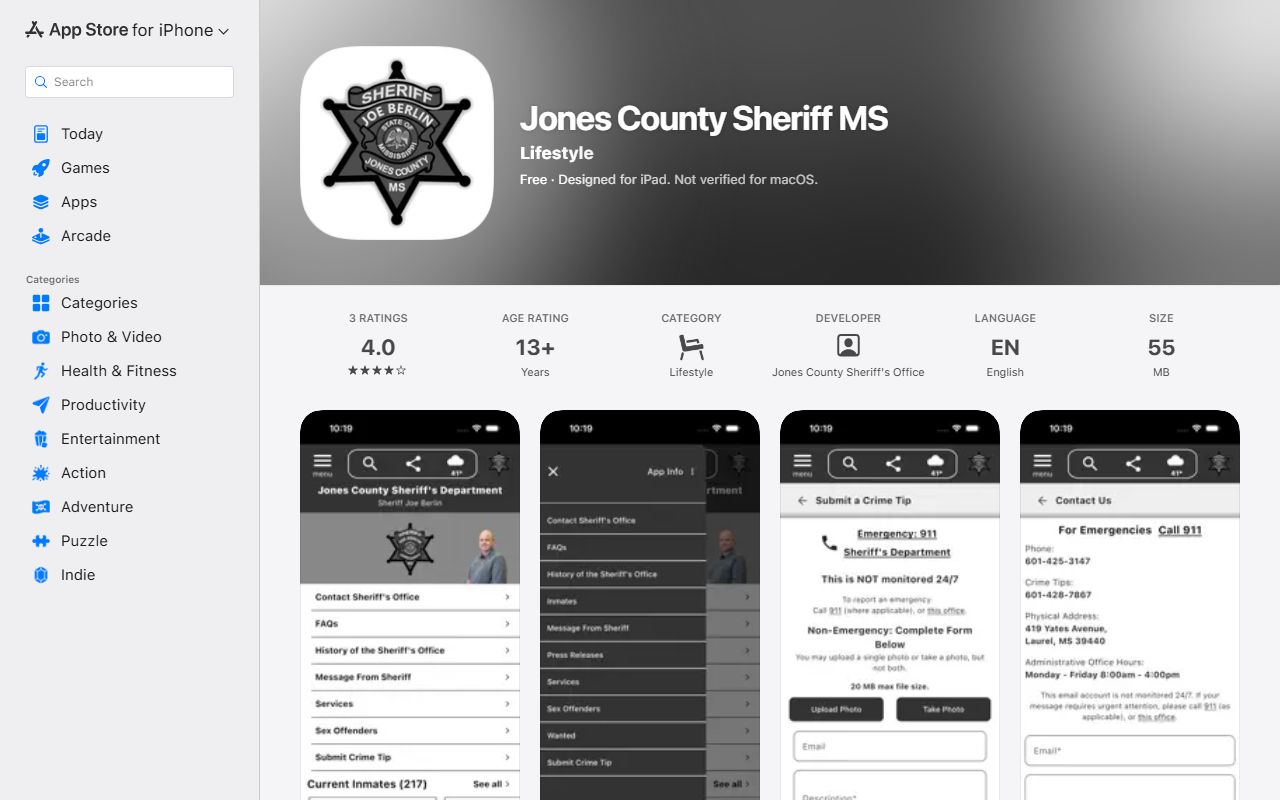
The app is available on both major platforms. The Apple App Store listing describes public information for press releases, inmates, most wanted, and sex offenders, along with crime tips and contact messages.
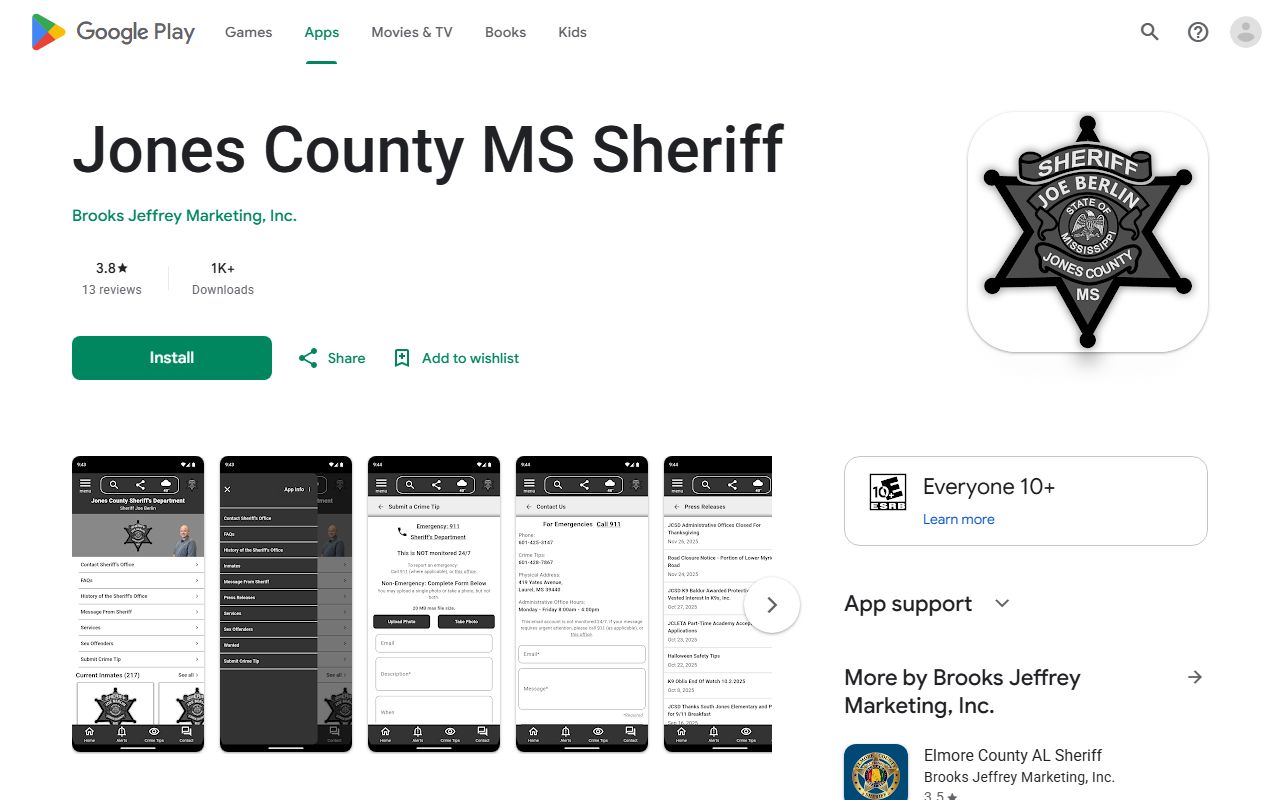
The Android version offers the same core tools. The Google Play listing adds special alerts and FAQs to the press release, inmate, most wanted, and sex offender sections.
Note: The app and roster reflect booking-stage charges that can change after court appearances, so always confirm bond, charges, and case numbers with detention staff.
How Jones County Charges Get Filed After an Arrest
The arrest is only the first step. After booking, the charge record truly begins when a prosecutor files a charging document with the court. That document names the offenses and starts the formal case. Mississippi uses three main forms, and the one that applies usually tracks how serious the offense is. Misdemeanors often start with a complaint or affidavit, many felonies move by information or indictment, and the most serious felonies go to a grand jury.
| Complaint | Information | Indictment | |
|---|---|---|---|
| Filed By | Officer / Prosecutor | Prosecutor | Grand Jury |
| Common For | Misdemeanors | Many felonies | Serious felonies |
| Starts | The case | The case | The case |
Jones County is served by District Attorney Brad Thompson, who was appointed in 2022. The District Attorney presents felony cases to the grand jury, decides which counts to pursue, and can amend or drop charges as the case develops. A felony prosecution depends on that prosecutor review, not just the officer's arrest affidavit, which is why a booking charge and a filed charge do not always match.
Jones County Charge Status and What It Means
Charges are not fixed once they are filed. As a case moves, a charge can be amended, reduced, added, dropped, or dismissed. The court docket records each change, and the Jones County MEC system uses status flags to show where a charge stands. Knowing these terms keeps a reader from misreading a file. A pending charge has not yet been resolved, while a nolle prosequi entry means the prosecutor formally chose not to proceed.
| Status | What It Means |
|---|---|
| Pending | The charge is filed and active, but the court has not yet reached an outcome. MEC may show Arraignment Pending or Plea Pending. |
| Amended / Reduced | The charge was changed, often to a lesser offense, through a motion or plea negotiation. |
| Dismissed | The court dropped the charge, which can happen for legal or evidentiary reasons. |
| Nolle Prosequi | The prosecutor formally declined to pursue the charge. MEC shows it as Nolle Pros Pending while it is processed. |
Warrant-related flags can also appear in a charge line when a person misses court or violates a condition. Jones County dockets and jail entries surface terms such as Bench Warrant Issued, Capias Pending, and MDOC Warrant Issued. These tie the charge record back to enforcement, and the Jones County criminal court records page explains how the full case file carries each charge through to a final disposition.
Charges vs. Convictions
A charge is an accusation, not a finding of guilt. Being charged after an arrest is not the same as being convicted. Many charges are reduced, dropped, or dismissed before a case ends, and some defendants are acquitted at trial. The prosecutor must prove a charge, and only a plea or a verdict turns a charge into a conviction.
| Charge | Conviction | |
|---|---|---|
| Stage | Accusation | Verdict or plea |
| Burden of Proof | Probable cause | Beyond reasonable doubt |
| Public Record | Yes | Yes |
Note: A booking charge on the jail roster may differ from the charge a prosecutor finally files, so the court record is the better source for what a person actually faces.
Sealed vs. Expunged Records
Some charge records are removed from public view. A sealed charge is restricted from ordinary public searching but still exists in the system. An expunged charge is treated under Mississippi law as though it never happened. The MEC flags SEALED and EXPUNGED mark these files so they no longer return in normal results. Expungement runs through Miss. Code Ann. Section 99-19-71 and depends on the charge type, the disposition, and a waiting period.
| Sealed | Expunged | |
|---|---|---|
| Visibility | Hidden from public | Destroyed / treated as never existed |
| Law Enforcement | Limited access | Very limited |
| Eligibility | Set by court order or statute for restricted matters | Eligibility-specific under Miss. Code § 99-19-71 |
An arrest that led to no conviction, a dismissed charge, or a completed diversion may be eligible for expungement, but the rules differ by category. The petition is filed in the court that handled the case, and the statute does not promise that every charge can be cleared.
Jones County Charge Codes and Severity Levels
Each charge in a Jones County case is tied to a specific Mississippi statute. That statute code tells you the exact offense and its severity level. Mississippi sorts offenses into felonies, misdemeanors, and lesser violations, and the level shapes which court hears the case and what penalties apply. Felonies route to the Circuit Court, while misdemeanors often sit with Justice or Municipal courts.
One arrest can produce several separate charges. A single booking might list a felony count, a misdemeanor count, and a traffic-related count, each with its own code and its own status. Reading the codes alongside the status flags shows which counts are serious, which were reduced, and which the prosecutor dropped. The charge level also signals the stakes, since a felony conviction carries longer-term consequences than a misdemeanor.
Statewide Charge and Criminal History Lookups
County charge records are only part of the picture. Some charges and convictions roll up into statewide systems. The Mississippi Department of Corrections runs an inmate search for people sentenced to state prison, which is separate from the county jail roster. People search it when a person has left county custody for a state sentence.
Certain convictions also feed the state sex offender registry. The Mississippi Sex Offender Registry, run by the Department of Public Safety, offers name and geographic searches and is governed by conditions of use and a misuse warning.
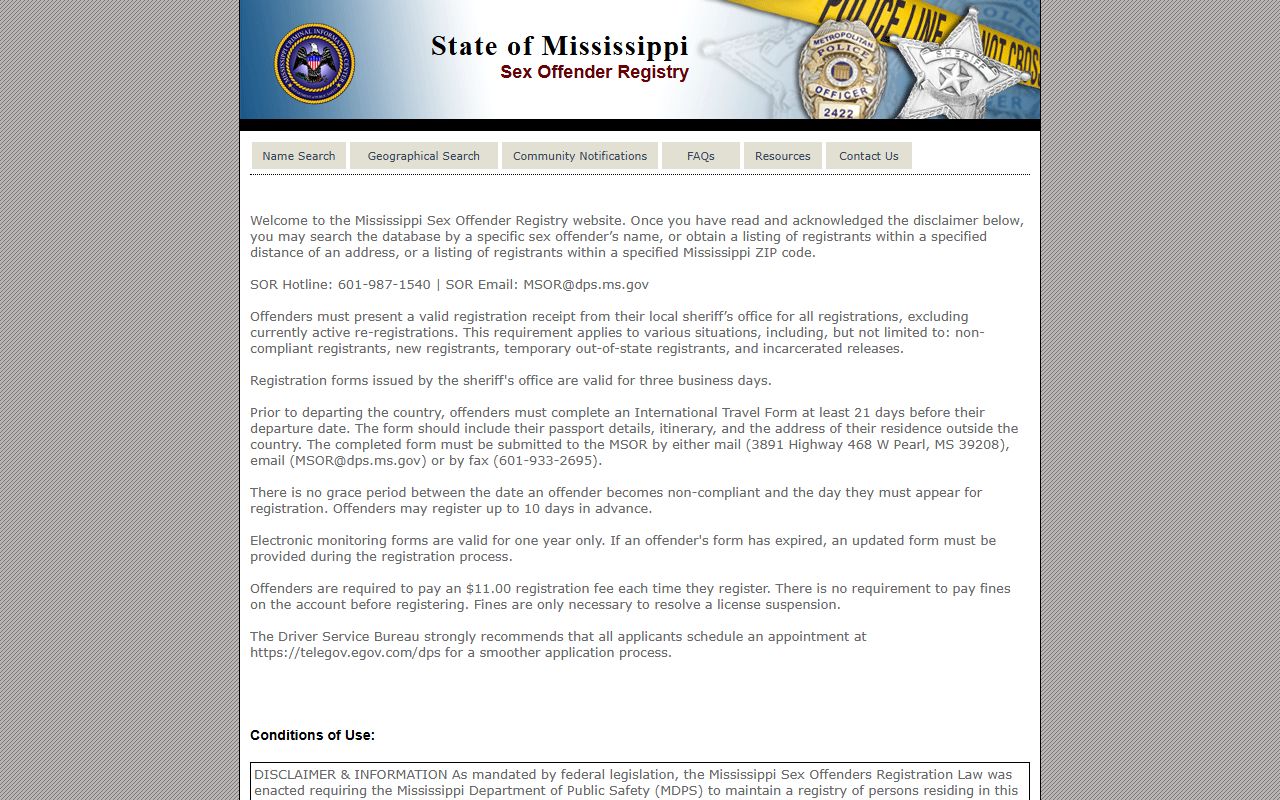
The registry is conviction-based and is not an arrest or charge database, so it reflects only people who have been required to register under state law.
Background Check Considerations
Arrest and charge records are public, but using them for a formal background check has limits. A casual lookup on a public roster or docket is one thing. A report used for hiring, housing, credit, or insurance is governed by the federal Fair Credit Reporting Act and must run through a regulated agency. Because booking charges can change, the court file held by the clerk is the most reliable source for what was actually charged.
Important: This website is not a consumer reporting agency under the Fair Credit Reporting Act, and its records may not be used to decide employment, housing, credit, or insurance.
Restricted Charge Records in Jones County
Not every charge record is open to the public. Youth Court charges are confidential under Mississippi law and are handled in the County Court's juvenile side. Sealed and expunged charges do not return in ordinary searches, and a clerk may share only limited procedural detail. Charges tied to an ongoing investigation can also be withheld while the matter is active.
Mississippi's Public Records Act, found in Title 25, Chapter 61, presumes that public records are open unless a law provides otherwise. That presumption still bends for juvenile files, sealed matters, and sensitive identifiers, which are redacted from public images. When a charge record is restricted, the path forward is to identify the custodian, confirm whether you are a party or attorney, and ask the court directly rather than relying on a convenience copy.